


Key Takeaways
Central control with local flexibility: headquarters publishes once and every location shows it, while store managers still edit the parts they own.
Consistency protects revenue: a wrong price or a dead promotion in one location damages the brand everywhere, not just in that store.
The use case changes by industry: a restaurant franchise needs menu accuracy, a gym franchise needs schedules and a real estate franchise needs listings.
Start with a pilot, not a rollout: two or three locations will surface the content governance questions that a single screen never will.
Walk into three locations of the same brand in one week and you can usually tell which one has a marketing team paying attention. One is running the latest campaign, while another still has last season’s poster in the window. Franchise digital signage helps close that gap by giving headquarters one place to manage promotions, pricing and brand messaging across the network, while letting individual locations publish relevant local content.
This guide explains how franchise digital signage works, where it adds value across industries, which software capabilities matter as the network grows and what it costs to get a single location up and running.
What is franchise digital signage?
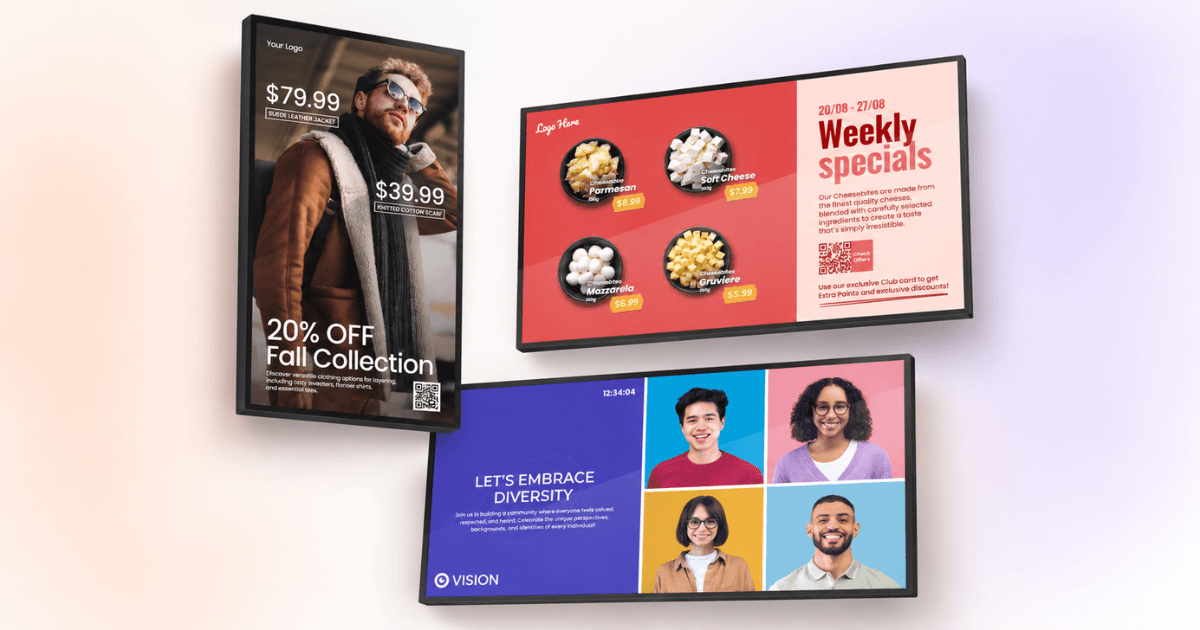
Franchise digital signage is a network of screens across multiple locations that is managed through a central platform. Headquarters controls brand-wide content, while franchisees can update approved local content. The defining feature is not the screen itself, but the division of control between the franchisor and the franchisee.
That setup is very different from managing one screen in one store. At one location, the person updating the screen effectively controls it. Across 40 locations, the business must decide who can change a price, who can promote a local event and what happens when a location does not publish the national campaign. The software turns those decisions into permissions, approval workflows and publishing rules.
Franchise digital signage is widely used in retail and restaurants, where promotions, menus and pricing change often. It also suits distributed brands such as gyms, banks, hotels, healthcare clinics and service businesses.
The scale of the franchise market is worth understanding before budgeting for a rollout. The International Franchise Association projects that U.S. franchise establishments will grow from 832,521 in 2025 to 845,000 in 2026, adding 12,479 locations. Each new unit must represent its brand correctly from opening day, while serving its local customers.
How can digital signage help franchises scale?
Benefit #1: Strengthen brand consistency across locations
Brand consistency breaks at the local level, not at headquarters. A campaign designed once becomes 40 slightly different versions by the time each location has printed it, resized it or quietly skipped it. Centrally managed screens reduce that variation by letting headquarters send approved creative to every location and schedule it to go live at the same time.
The cost of getting it wrong is measurable. PwC’s Experience is Everything study found that almost one in three consumers will walk away from a brand they love after a single bad experience. In a franchise network, that experience may happen in one location, but customers are likely to associate it with the wider brand.
Benefit #2: Create demand and support sales
Screens are most effective when they appear close to the decision point. A promotion that changes at 11 am can respond to current demand in a way a poster printed weeks earlier cannot. A 2026 Journal of Marketing field study spanning 237 campaigns and 30 million shoppers found that digital signage increased the likelihood of purchasing a featured product by 8.1%.
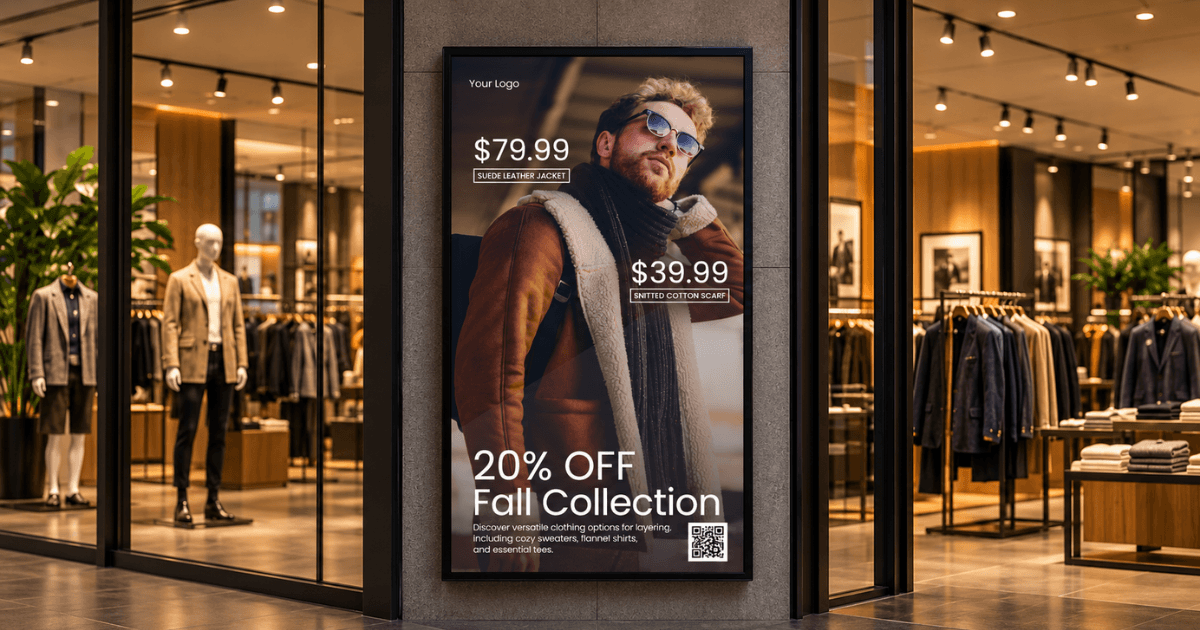
Franchise case study: Midas France shows how this can work across a franchise network. The company uses Yodeck across 225 screens in 119 service centers, replacing static waiting-area promotions with centrally managed playlists that combine service offers, news and traffic updates.
Benefit #3: Balance global control with local relevance
Prices, languages and promotions can vary between franchise locations. Digital signage lets headquarters protect the core brand while giving local teams controlled space for relevant updates.
HQ can set the template, logo placement and national campaign content. Franchisees can then update approved areas with local events, prices or language versions without changing protected brand elements. That structure is also what lets a network localize by language without maintaining 12 separate content libraries.
Benefit #4: Improve employee training and internal communication
Screens also earn their place behind the scenes. Staff-facing displays can share shift briefings, safety procedures, onboarding steps and training reminders with employees who may not have regular access to corporate email.
In Yodeck’s survey of 178 professionals, 71% said their organizations use digital signage or screens. For franchises, the main benefit is reach: screens in kitchens, stock rooms and staff areas can put updates where deskless employees are likely to see them during a shift.
Benefit #5: Reduce reliance on IT
The last thing you want is updates delayed by IT requests. Franchise digital signage software lets non-technical teams manage approved content themselves, putting day-to-day updates in the hands of marketing teams and store managers. This is especially useful in franchise networks, where independently operated locations may not share headquarters’ IT resources or have dedicated IT staff of their own.
Benefit #6: Increase compliance across jurisdictions
Operating across states or countries can mean different requirements for pricing disclosures, allergen information, promotional terms and languages. Content that meets the rules in one market may need changes in another. Digital signage can make these requirements easier to manage. HQ can publish approved content by region, protect compliance-related elements from local edits and send corrections to affected locations at once instead of coordinating updates through dozens of emails.
Interesting insight: Content governance is where multi-location rollouts tend to come unstuck. Decide who creates and approves content, how often it changes and who owns the content calendar before the first screen goes live. Without that structure, screens start showing outdated material within weeks.
Work out your rollout structure
Billing, permissions and who controls what. Book your 30-minute digital signage demo
Book a demo
The benefits of digital signage for franchises by industry
| Industry | Digital signage benefit |
|---|---|
| Retail franchises | Turns every screen into a revenue driver by running promotions network-wide and protecting price accuracy |
| Restaurant franchises | Keeps menus, pricing and allergen information accurate across locations and supports upselling at the counter |
| Office-based franchises | Carries internal updates, KPIs and dashboards to staff without adding to the email load |
| Healthcare franchises | Guides patients through the building and explains services while they wait |
| Fitness franchises | Publishes class schedules, promotions and sign-ups where members already stand |
| Hotel franchises | Handles check-in information, daily events and local recommendations in the lobby |
| Real estate franchises | Displays live listings, open house times and agent profiles across every branch |
Digital signage for retail franchise stores: Execution
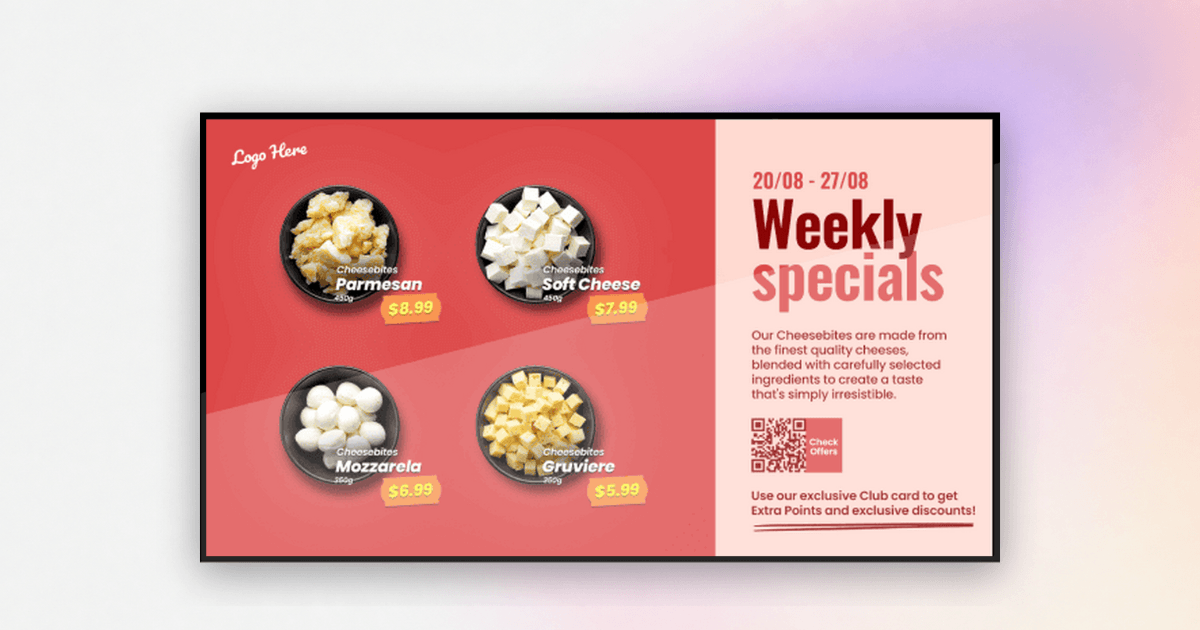
Franchisees focus on local sales, while promotions often come from headquarters. When printed materials arrive late, stores can miss part of the promotional window and HQ may not know when each location launched the campaign. Digital signage closes both gaps. The campaign can be published across the network the same morning, and HQ can see which screens are live.
Digital signage for restaurant franchise stores: Compliance
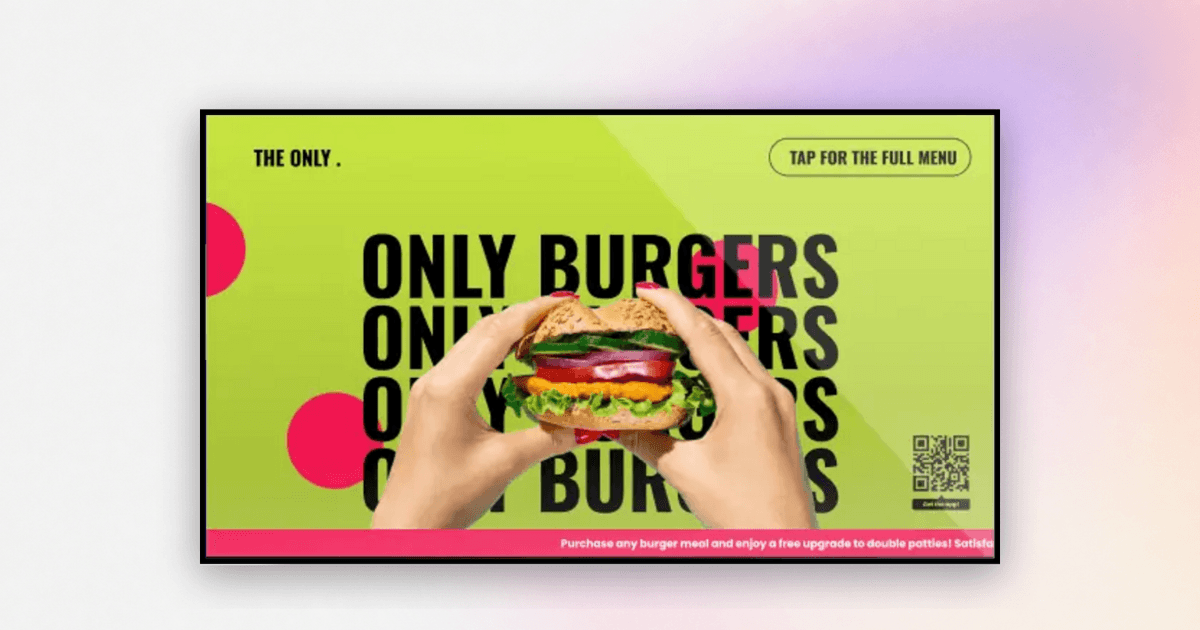
Menus create legal exposure, not just pricing decisions. The FDA menu labeling rule requires chains with 20 or more locations to show calorie counts for standard items on menu boards, and franchised units count toward that 20. With printed menu boards, a recipe update, supplier change or price adjustment can trigger a costly reprint cycle across the network. Digital menu boards turn those changes into a centralized update, while approved local areas can accommodate seasonal items without altering locked compliance content.
Digital signage for office-based franchises: Ownership
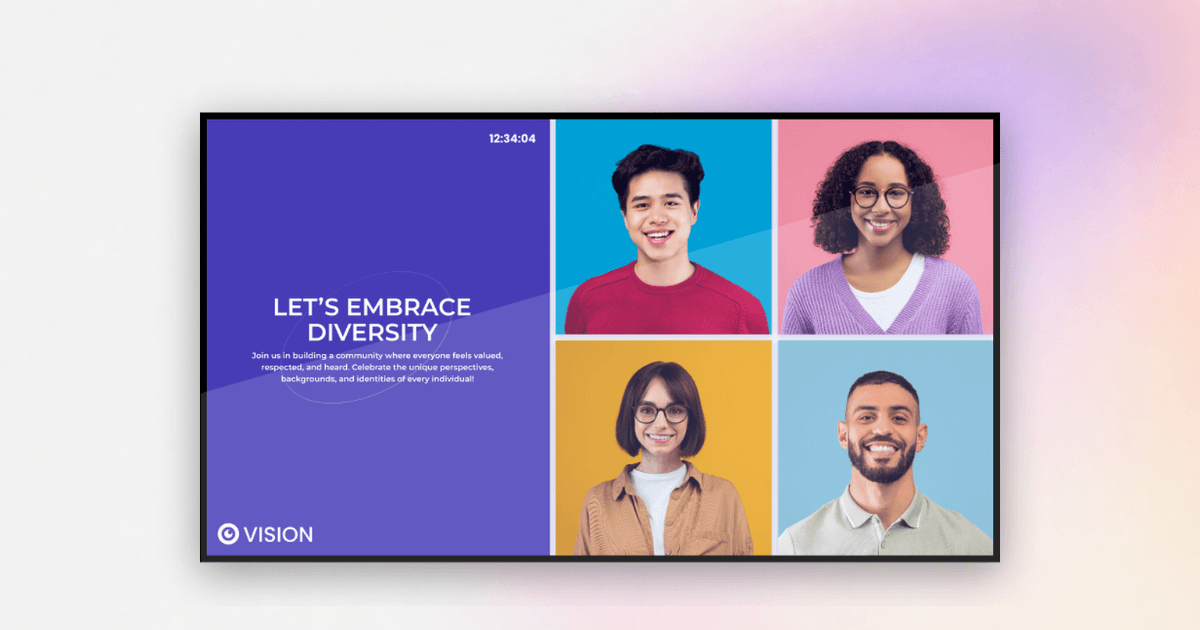
Every branch runs its own P&L, but pricing and regulated claims belong to head office (the franchisor) which answers for them. Signage splits the layout into protected zones with separate owners. HQ publishes approved content into a locked zone, while the branch adds live local figures without changing the brand or compliance content and neither can overwrite the other.
Digital signage for healthcare franchises: Wait times
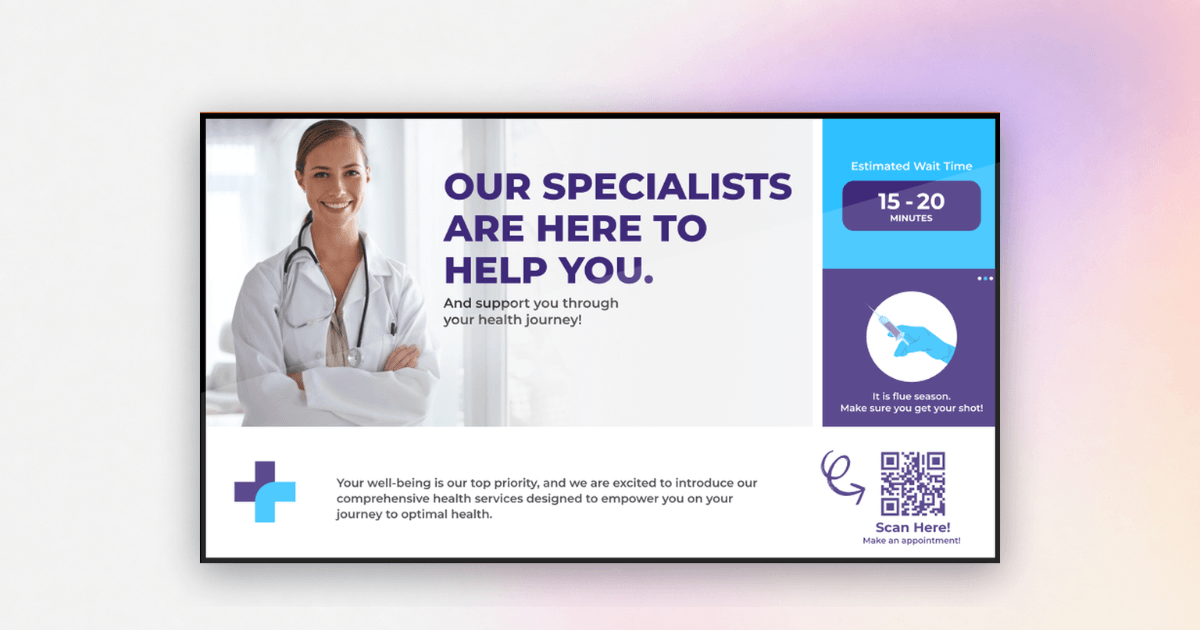
Waiting is the complaint clinics get most, and in a franchise the review names the brand, not the branch. Signage cannot shorten the wait, but it changes what happens during it: queue position and check-in steps on screen stop patients asking reception the same question, and service content gives the room something other than a clock.
Digital signage for gym and fitness franchises: Empty desks

24/7 gym franchises operate for long hours without anyone at the desk, which makes the screen the only staff member present. Safety rules, equipment out of service and induction reminders are brand standards the franchisor is accountable for across every club, so they publish centrally and stay locked. The local zone is where the club earns: personal trainer availability, studio hire and physio slots, local revenue opportunities that may be invisible to head office.
Digital signage for hotel franchises: Revenue
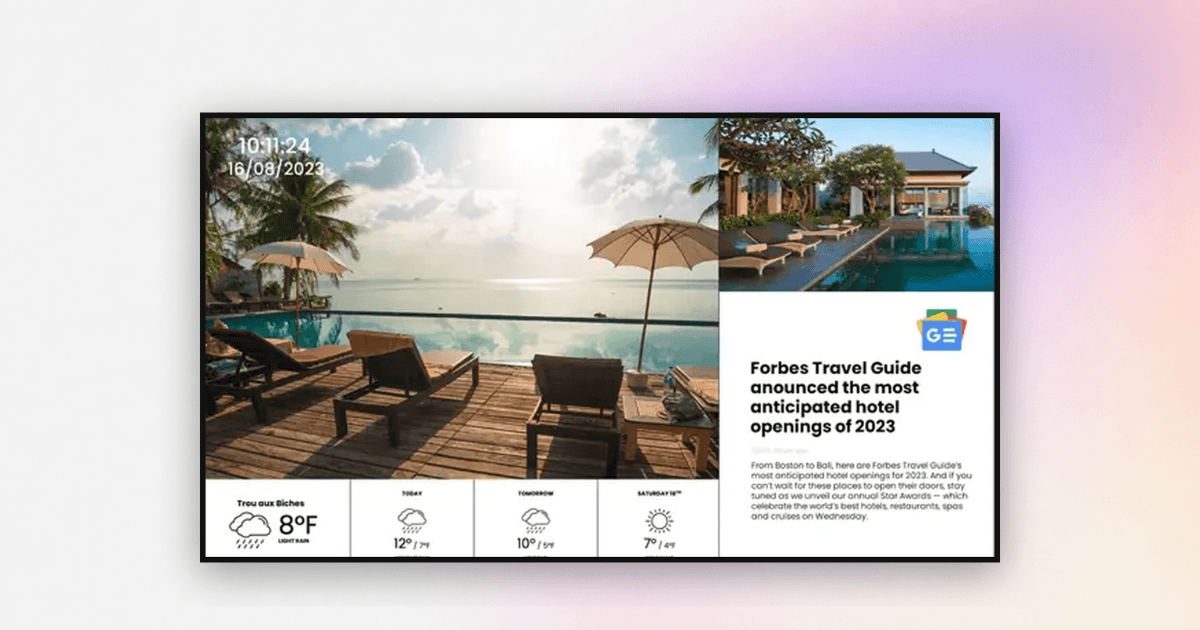
A hotel franchise has two sets of content fighting for the same lobby screen. The brand wants direct bookings and loyalty signups because every guest who books through a travel site costs the hotel commission. The hotel wants to sell its spa, restaurant and parking, generating revenue it may retain locally. Digital signage runs both: the brand’s content is locked into the layout and cannot be changed locally, while the hotel updates its own offers daily in the space beside it.
Digital signage for real estate franchises: Local stock
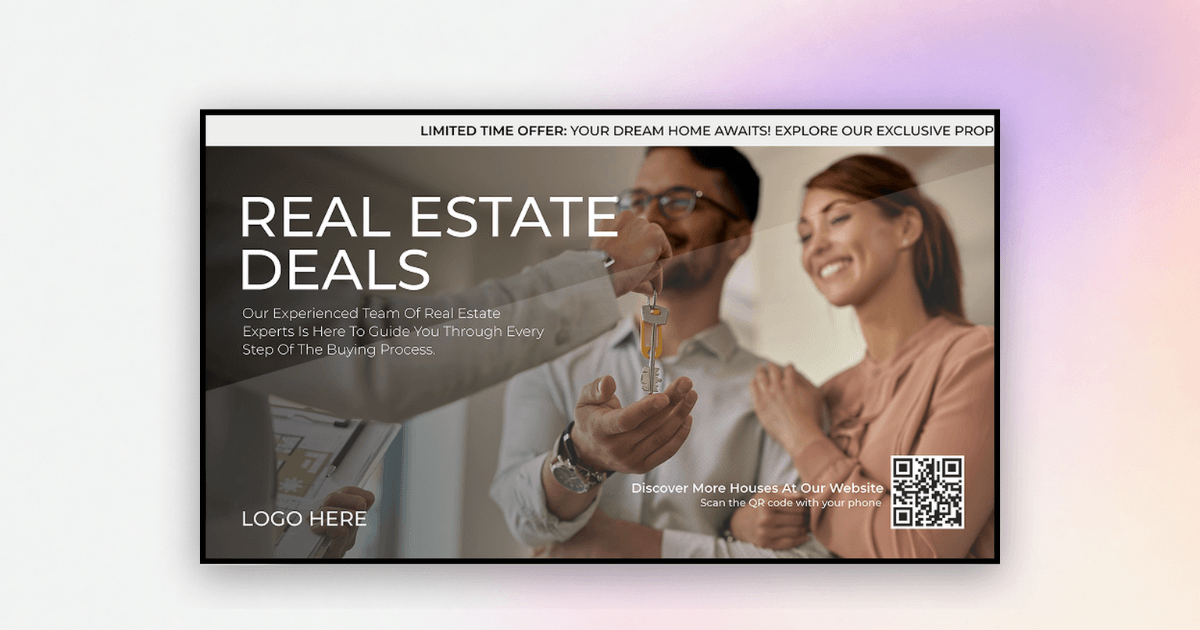
Property listings belong to the branch, while brand campaigns belong to the wider network. The shop window needs to show both at once. Printed listings can go stale within days, leaving a sold property in the window for a week and making the branch poorly managed. That reflects on the brand, not just the local office. Screens can pull from the branch’s listing feed, so properties update automatically without reprinting, while head office publishes the network’s seasonal campaign across all 40 locations at the same time.
The questions that come up first
Who pays for franchise digital signage, HQ or the franchisee?
Both directions happen. HQ can require signage across the network, since most franchise agreements let the franchisor update system standards, and recover the cost through a technology fee. Or a franchisee decides locally and buys their own. Either works, but the choice decides how billing is set up, so settle it before the first screen is ordered.
Can each location be invoiced separately under one account?
Yes. Yodeck’s Billing Entities feature splits one account into multiple Billing Organizations, each with its own invoices, currency, tax details and renewal date. HQ orders centrally and selects which location to bill at checkout. Volume discounts are calculated on the account’s total license count and shared proportionally, so every location gets the discount the whole network earns. Included on Enterprise and Enterprise Plus, and available as an add-on on Basic and Premium.
Can a franchisor supply signage to its own franchisees?
Yes, and for larger networks it is often the cleanest answer. The white label program puts the platform under the franchisor’s own brand and pricing, so franchisees see the brand’s own system. The reseller program is the same commercial structure without the rebranding.
What has to be decided before the first screen goes up?
Five things, and none of them are technical. A corporate chain answers all five with a purchase order. A franchise network has to agree each one with people who own their own businesses.
| Decision | Corporate chain | Franchise network |
| Who buys | Central purchase order | Capex, marketing fund, technology fee or central order billed per location |
| Deployment | Mandated and scheduled | Mandated at signature or negotiated at renewal |
| Content control | HQ owns everything | Split by agreement, locked and open zones |
| Billing | One invoice | One account, invoiced per location |
More on this in Yodeck’s 18 questions retail managers ask about digital signage
Top features to look for in franchise digital signage software
#1 Centralized screen management
Need: One campaign across the network on the same morning, published once.
Yodeck: Publish to every screen or to groups organized by region or franchise territory. No site visits, no chasing managers.
#2 Proof that campaigns actually ran
Need: A franchisee is an independent business, so HQ cannot assume the national campaign went up.
Yodeck: Screenshots show what any screen is displaying at that moment, so checking store 34 does not mean phoning store 34. Screen Takeover overrides the network immediately for a recall or a closure.
#3 Playlist scheduling
Need: A poster that nobody removes can remain in a franchisee’s window long after a promotion has ended. HQ may close the campaign, but without someone on site to act, the brand is left displaying stale content.
Yodeck: Set campaign start and end dates once, so content stops displaying when the promotion expires. Yodeck schedules follow each player’s local time zone, so an 8am offer starts at 8am in every market rather than at head-office time.
#4 Screen grouping
Need: Territories rarely match regions. A franchise network may need to target content by franchisee territory, store format and market at the same time. Rebuilding a campaign for every combination quickly consumes the marketing team’s time.
Yodeck: Group by location, region or store format. From Premium, tag filtering lets one playlist serve the network while each screen pulls only what is tagged for it, so a territory with different pricing or a second language needs no separate build.
#5 Remote monitoring
Need: In a corporate chain, an area manager may spot a dark screen during a visit. In a franchise network, nobody is routinely walking every location, and the team on site may stop noticing that a screen has gone offline.
Yodeck: Email alerts can notify head office when a player goes offline. Content can also continue playing from local storage for up to 35 days if a location loses internet access, so a franchisee’s broadband issue does not turn into a blank screen.
#6 Access and permissions
Need: Franchisees own and run their businesses, so they need control over local content. HQ owns the brand, however, and cannot allow dozens of independent operators to alter core campaign elements. Both needs are valid, which makes permissions essential.
Yodeck: Lockable Layouts, available from Premium, protect the parts of a layout that locations should not change. Enterprise Custom Roles and Workspaces can limit managers to their assigned locations.
Getting started across your network
The franchise networks that get the most from digital signage are rarely the ones with the most expensive hardware. They are the ones that decide early who controls each content area, agree on a content calendar before launch and choose a platform with permissions that match those decisions.
Yodeck has a 4.7 out of 5 rating on G2 from more than 3,000+ verified reviews, with ease of use the reason customers cite most often. That matters in a franchise network because the people updating screens are often store staff, not dedicated signage specialists.
Start with a pilot across two or three locations, prove the workflow and then scale the same structure across the network. New accounts receive 30 days of unlimited feature access for up to five screens, giving teams enough capacity to test a pilot before a wider rollout.
Not sure which plan fits your network?
Every new account gets 30 days of unlimited feature access across up to five screens.
Start for free