


A practical guide to the reseller business model: what you can earn, how the recurring revenue math works and how to pick the right platform to sell.
Key Takeaways
A digital signage reseller sells a vendor’s platform under the vendor’s brand: the vendor handles product, updates and support while the reseller owns the customer relationship
The model runs on recurring revenue: every screen you sell keeps paying you at renewal, so income compounds instead of resetting each month
Four revenue streams stack on top of each other: software margin, hardware, installation and ongoing content or managed services
Platform choice decides your margin and your workload: margin structure, support ownership, partner tooling and deal registration matter more than feature lists
Almost no upfront investment is required: you skip product development entirely and start selling with the team and client base you already have
If you run an IT, AV or managed services business, you have probably watched clients put screens up in lobbies, break rooms and storefronts and wondered who is getting paid for all of it. Becoming a digital signage reseller is the most direct way to make that answer “you.”
You join a digital signage reseller program, sell a proven platform to your existing clients and earn a margin on every subscription, every year it renews. No product to build, no support desk to staff. This guide covers what the reseller model is, what a reseller can realistically earn, how to get started and how to evaluate the platforms competing for your signature.
What is a digital signage reseller?
A digital signage reseller is a business that partners with a digital signage software vendor to sell the vendor’s platform to end customers, usually bundled with hardware, installation and support services. The vendor builds and maintains the software. The reseller finds the customers, sells the solution and earns a margin on every subscription.
In practice, the reseller sits between the platform and the client. The customer gets a complete signage setup: screens, media players, software and someone local who answers the phone. The vendor handles everything behind the scenes: software updates, infrastructure and technical support. The reseller keeps the relationship, the trust and the recurring margin.
One distinction is worth settling early: reselling is not white labeling. As a reseller, the vendor’s brand stays visible and works in your favor, since an established name carries reviews and market recognition you do not have to build. With white label digital signage, you rebrand the platform as your own product, which gives you pricing control but also makes you the brand your customers hold responsible. The two models suit different businesses, and we compare them in detail in our white-label digital signage guide.
This article stays on the reseller path: the economics, the steps and the platform decision.
Why sell digital signage in 2026
Demand for digital signage keeps growing because every screen a business installs needs software and someone to sell, configure and support it. That last part is where resellers live. Most small and mid-sized businesses do not buy a CMS subscription off a website and figure out the rest. They buy a working solution from a provider they already trust with their technology.
The market backs this up. According to Grand View Research, the global digital signage market reached $31.1 billion in 2025 and is projected to grow to $58.4 billion by 2033. For a reseller, that growth is not an abstract chart. Market growth shows up as restaurants replacing printed menus, offices adding lobby displays and retailers converting window posters to screens, all inside your local client base.
There is also a timing advantage. Digital signage has crossed from novelty to standard equipment in most industries, but the buying process still confuses end customers: which screens, which player, which software, who installs it. Confused buyers hire guides. A reseller who packages the decision into one offer removes that friction and gets paid for it.
How much can a digital signage reseller make?
A digital signage reseller earns from four revenue streams: a recurring margin on every software subscription, hardware markup, installation fees and optional monthly services. The subscription margin is the smallest monthly number and the most important one, because it repeats.
Here is how the four streams break down:
software margin: your cut of every subscription, paid for as long as the client stays subscribed. The percentage depends on the vendor’s program terms
hardware: screens, mounts and media players, sold at standard resale markup. Some platforms run on low-cost devices, and Raspberry Pi notes that approved Yodeck resellers source and assemble Raspberry Pi-based players locally, which keeps hardware sourcing flexible and the markup in your hands
installation: mounting, cabling, network setup and configuration, billed per site as project revenue
ongoing services: content design, scheduling management or full managed signage, billed monthly for clients who want screens they never have to think about
To make the recurring piece concrete, run a modest example. A client with 20 screens on a plan priced at, say, $8 per screen per month represents $1,920 in annual subscription value. At a 30% margin, that single account pays you $576 every year it renews, before you count hardware, installation or services. Build a book of 25 such clients and the subscription margin alone reaches $14,400 a year. That income requires no new sale, only renewals from clients you already won.
The recurring revenue effect
Recurring revenue changes the shape of a reseller’s business, not just the size. Project businesses restart from zero every January: last year’s installations were paid once, and this year’s revenue depends entirely on this year’s pipeline. A reseller’s subscription book carries forward. Each new client stacks on top of every renewal, so year three starts where year two ended, plus growth.
The compounding gets stronger through expansion. Signage clients tend to add screens: a second location opens, a warehouse wants safety displays, the front desk wants a welcome screen. Every added screen raises the recurring base without a new logo. A business built on predictable, contracted income is also easier to forecast, easier to staff for and consistently more attractive to buyers if you ever sell, because acquirers pay a premium for revenue they can count on rather than revenue you have to hunt down again each year.
Interesting insight: Support ownership is a hidden margin factor. If your vendor handles end-customer technical support, every support hour stays off your payroll. If support lands on you, your effective margin shrinks with every ticket. Ask any prospective vendor exactly who answers when a client’s screen goes dark at 7AM.
How to become a digital signage reseller
Becoming a digital signage reseller takes weeks, not months, because the product already exists. The real work is choosing the right platform and building a repeatable sales motion. Six steps cover it:
- Assess your fit. The reseller model works best when you already serve business clients with technology: managed IT, AV installation, network services, office equipment or marketing services. Your existing client list is your first pipeline.
- Choose a platform. Platform selection is the highest-stakes decision in the whole process, covered in the next section. Margin structure, support ownership and ease of use decide whether reselling becomes a profit line or a headache.
- Join the reseller program. Most vendors run an application process followed by onboarding. Look for programs that include structured training and certification rather than a login and a “good luck.”
- Learn the product hands-on. Set up your own screens first. You should be able to demo the platform, answer common questions and know what companies put on their screens across the industries you plan to sell into.
- Package your offer. Decide what your standard bundle looks like: software, player, screen, installation and an optional service tier. Clients buy outcomes, so sell “working signage in your lobby by Friday,” not a parts list.
- Sell to your base first, then expand. Start with existing clients who already trust you, then move to local prospects with visible signage needs. Objection handling gets easier fast; most buyer concerns repeat, as any list of questions retail managers ask about digital signage shows.
Pro tip by Yodeck Team: Yodeck’s free plan covers one screen with no credit card required, which makes it a zero-cost demo kit. Set up a live screen in your own office, and every client meeting becomes a product demonstration.
Become a Yodeck reseller
Sell award-winning digital signage software trusted by 65,000+ businesses worldwide and earn recurring revenue from every screen.
Become a partner
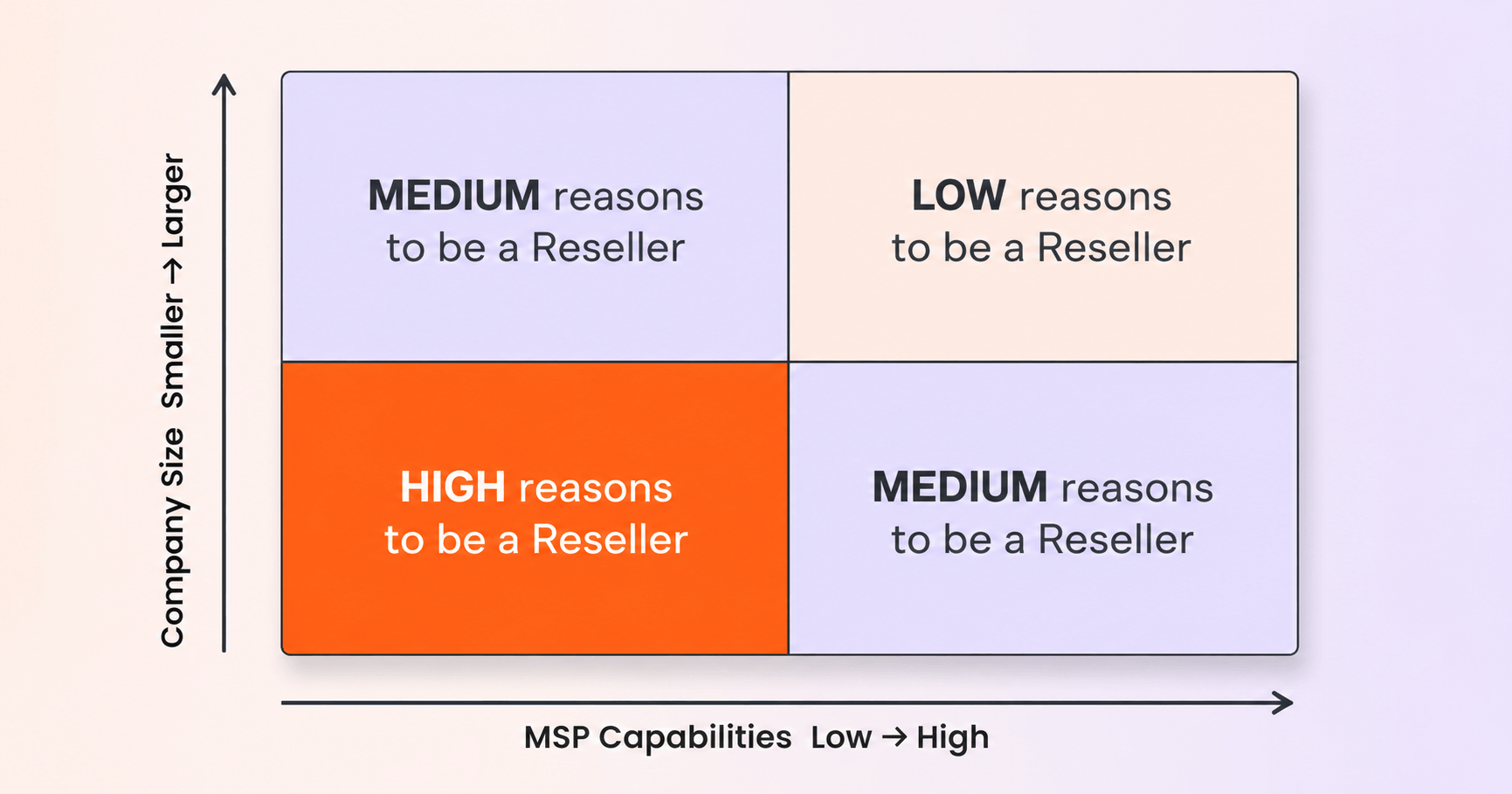
Who makes a good digital signage reseller
The best digital signage resellers already sell technology services to business clients, because signage slots into an existing trust relationship instead of requiring a cold start. Four business types fit the model naturally:
| Business type | What you already bring | Your natural sales motion |
|---|---|---|
| Managed service provider (MSP) | Client IT environments, support contracts, monthly billing relationships | Add signage as a line item on existing managed agreements |
| AV or IT integrator | Installation crews, hardware sourcing, site survey skills | Bundle software subscriptions into every screen installation |
| Value-added reseller (VAR) | Vendor management experience, procurement relationships | Attach signage to hardware and software deals already in motion |
| Agency or consultant | Content skills, marketing retainers, brand relationships | Sell signage as a new channel, then bill monthly for the content that runs on it |
The common thread is recurring contact with business clients. If your clients already call you about technology, adding screens to the conversation is a short step. If you would need to build a client base from scratch, the reseller model still works, but expect a slower ramp.
How to choose a digital signage platform to resell
Choose a reseller platform on the economics and the operating model, not the feature list. Most established platforms cover the core features a typical client needs. What separates a profitable partnership from a frustrating one comes down to seven questions:
- How is the margin structured? Look for the range, what determines where you land in it and whether margins improve as your book grows.
- Who owns end-customer support? Vendor-handled support protects your margin. Reseller-handled support quietly converts your profit into unbilled labor.
- What partner tooling exists? You need visibility into your client accounts from one place. Managing 30 clients through 30 separate logins does not scale.
- Is training and certification included? Structured onboarding shortens the gap between signing and selling.
- Is there deal registration? Registered deals protect you from being undercut on an opportunity you developed.
- How easy is the product for end users? Every client who can manage their own content is a client who never calls you about it. Usability is a support cost in disguise.
- How strong is the vendor’s brand? As a reseller, you borrow the vendor’s reputation. Reviews, ratings and a recognizable name close deals faster than any pitch deck.
Run every candidate digital signage software vendor through this list and the field narrows quickly. Vendors who publish clear program terms and put partners in front of real tooling tend to be the ones structurally invested in reseller success.
The Yodeck reseller program
Yodeck’s reseller program is built around the economics that matter in this guide: margins from 20% up to 50%, technical support handled by Yodeck and onboarding, training and certification included from day one. Resellers sell a platform trusted by 65,000+ businesses across 135+ countries, backed by a partner network of more than 1,000 companies. On the brand-strength question, Yodeck holds a 4.7 out of 5 rating across more than 3,000+ verified reviews on G2, including recognition as a G2 Leader with 20 Spring 2026 badges.
The model works in practice. Serit, one of Norway’s largest independent IT groups and a Microsoft partner, added Yodeck to expand its service portfolio and now manages hundreds of client screens as a reseller. Digital signage runs as a recurring revenue line alongside Serit’s core IT services.
Hardware flexibility rounds out the program. Clients can run the Yodeck Player or bring their own devices across Android, Windows, Amazon Fire TV, webOS and Tizen, so your bundles adapt to each client’s budget instead of forcing one hardware path. If the model fits your business, the next step is a conversation: become a Yodeck partner and a partner team member will walk you through program terms for your market.
Digital signage reselling rewards the businesses that treat it as a portfolio decision rather than a side experiment: pick a platform with honest economics, sell to the clients who already trust you and let the renewals compound. The market is growing, the model is proven and the first screen you sell starts paying you back every year after.
Get onboarded by our channel sales specialist