


The setup, the limits, and the cheapest free software path. All in under ten minutes.
Key Takeaways
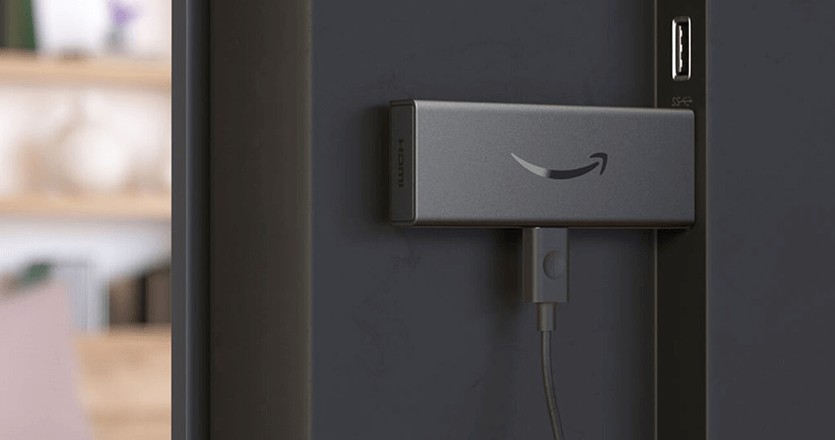
The Amazon Fire TV Stick is one of the cheapest ways to put a screen on a wall and call it digital signage. It plugs into any TV with an HDMI port, runs free apps, and costs less than a decent dinner. For small businesses testing whether digital signage is worth the effort, that’s a hard combo to beat.
But cheap hardware comes with tradeoffs. The Fire TV Stick was built for streaming Netflix, not for running a menu board ten hours a day. So the real question isn’t whether the Fire TV Stick can run signage; it’s whether it can run your signage.
This guide covers the practical answer: which models work, how to set one up, what software to pair it with, and where the Fire TV Stick’s limits start to show.
Can you use a Fire TV Stick for digital signage?
Yes, with the right software and realistic expectations. The Fire TV Stick is a streaming device, not a commercial-grade media player, but for one or two screens running menu boards, lobby content, or promotional loops, it gets the job done.
The key is the operating system. Fire OS is based on Android, which means most digital signage CMS platforms, including Yodeck for Fire TV Stick, can install a native app directly from the Amazon Appstore. You pair the stick to your account, push content from the cloud, and the screen starts displaying. No extra hardware, no separate player to mount.
Where it stops working is at scale. Once you need to manage ten screens, run them around the clock, or turn TVs on and off remotely, the Fire TV Stick runs out of room. That’s not a failure of the device. It’s just the wrong tool for that job. Knowing where the line sits is half the value of this guide.
Which Fire TV Stick models work for digital signage in 2026
Not every Fire TV Stick on the shelf today will work for signage. Amazon refreshed the lineup in 2025, renaming some models and introducing a new operating system on others. That OS change is where most buyers get caught out.
The Fire TV Stick line currently runs from around $35 for the entry-level Fire TV Stick HD to approximately $60 for the top-of-the-line Fire TV Stick 4K Max, with the Fire TV Stick 4K Plus sitting in the middle. The 4K Max is the most capable of the three for signage: it ships with a 2.0 GHz quad-core processor, 16GB of storage, 2GB of RAM, and Wi-Fi 6E support. For most small business signage use cases, that’s more than enough.
The Fire TV Stick 4K Plus, which is the renamed second-generation Fire TV Stick 4K released in October 2023, handles 4K content well at a lower price. The Fire TV Stick HD is the cheapest option and the right pick if your screens run mostly 1080p content like static images, menu boards, or simple slideshows.
| Model | Approx. price | Resolution | Storage | Best for signage when |
|---|---|---|---|---|
| Fire TV Stick HD | $35 | 1080p | 8GB | Single screen, basic content, tight budget |
| Fire TV Stick 4K Plus | $50 | 4K | 8GB | One or two screens, mixed content, 4K display |
| Fire TV Stick 4K Max | $60 | 4K | 16GB | Best stick option, smoother playback, more headroom |
The one to avoid is the Fire TV Stick 4K Select, released in 2025. It runs Amazon’s new Vega OS (a Linux-based operating system that replaces Fire OS) and most digital signage platforms, including Yodeck, are not yet compatible with it. The same applies to any future Amazon stick or TV running Vega OS. Before you buy, check the product listing for “Fire OS” rather than just “Fire TV.”
Note from the Yodeck team
The Amazon Signage Stick and the Fire TV Stick are two different products. The Signage Stick is purpose-built for commercial digital signage and supports features the Fire TV Stick doesn’t, including CEC display control and remote device management. For more on that device, see our Amazon Signage Stick digital signage guide.
What you need before you start
The setup itself is quick, but a five-minute checklist before you plug anything in saves a lot of back-and-forth later:
How to set up your Fire TV Stick for digital signage
The whole process takes about ten minutes from box to first frame on screen. Here’s the five-step version using Yodeck:
- Plug the Fire TV Stick into your TV’s HDMI port and connect the power adapter. Switch the TV to that HDMI input. Follow Amazon’s on-screen prompts to connect to Wi-Fi and sign in with your Amazon account.
- Open the Amazon Appstore on the Fire TV Stick. Use the remote’s search function and type “Yodeck.” Select the Yodeck app and install it. If you’re setting up from a laptop, you can also push the app to your stick from the Amazon website.
- Enable automatic app updates so you don’t have to manually update Yodeck later. Go to Settings → Applications → Appstore → Automatic Updates and switch it on.
- Launch the Yodeck app. It will display a 9-digit registration code on screen. Keep that code visible for the next step.
- Log in to your Yodeck account at app.yodeck.com on any browser. Go to Screens → Add Screen, pick Amazon FireOS Player, and paste in the registration code. Save it. Within a minute or two, the Fire TV Stick pairs with your account and starts playing whatever content you’ve assigned.
That’s it. From here, you can build playlists, add layouts, schedule content, and push updates from anywhere. All from the Yodeck portal.
Free digital signage software for Fire TV Stick
The Fire TV Stick is cheap. The software running on it doesn’t have to cost anything either.
Yodeck’s Free Plan covers one screen at no cost, with no credit card required to sign up. You get image and video playback, playlists, scheduling, layouts, web pages, and access to a library of free digital signage templates and apps for social feeds, weather, news, and QR codes.
If you’re running more than one screen, the first sign-up includes 30 days of unlimited feature access for up to five screens; enough time to test multi-screen setups and scheduling before deciding on a paid plan.
For a single Fire TV Stick paired with the Free Plan, the math is straightforward: a $35 to $60 stick, a TV you probably already own, and $0 in software costs. Total upfront cost stays under $100 for your first signage screen.
Fire TV Stick limitations every small business should know
The Fire TV Stick wasn’t designed for commercial signage, and it shows. None of these are dealbreakers for a single screen, but they add up fast at scale:
When Fire TV Stick digital signage stops making sense
There are clear signals that it’s time to move on. If you’re managing more than two or three screens, running them all day, or need CEC, kiosk lockdown, or remote network configuration, the Fire TV Stick will hold you back. At that point, the cost-per-screen difference between a consumer stick and a purpose-built media player becomes a rounding error compared to the time you’ll spend troubleshooting.
| Fire TV Stick | Yodeck Player | |
|---|---|---|
| Built for 24/7 use | No | Yes |
| CEC display power control | No | Yes |
| Auto-launch on boot | Unreliable on newer models | Yes |
| Remote network/display settings | No | Yes |
| Plug-and-play setup | Requires manual app install | Ships preconfigured |
| Cost | $35–$60 per unit | Free with any annual plan |
The Yodeck Player is the route most customers take once they’re past the testing phase, and it’s the same hardware powering signage networks for over 50,000 customers across 135+ countries, from single-screen cafés to multi-site enterprises.
If you’re still at the experiment stage, the Fire TV Stick is a fine place to start. Grab a Fire TV Stick you already have or pick one up for $35, and have a screen running this afternoon.