


Six ways to get your slides on the big screen, from a plain HDMI cable to an always-on display that runs without your laptop.
Key Takeaways
Every device works: you can cast PowerPoint to a TV from Windows, Mac, iPhone or Android, wired or wireless
HDMI is the reliability pick: a cable beats every wireless method when the presentation can’t fail
Wireless needs the same network: Chromecast, AirPlay and Miracast all depend on both devices sharing one Wi-Fi network
USB means video export first: TVs don’t open .pptx files, so the USB method requires converting slides to MP4
Looping needs a different tool: screen mirroring ties up your laptop, while unattended playback calls for a media player or digital signage software
You built the deck. Now you need to cast PowerPoint to a TV, and the method you pick depends on what’s in front of you: a cable, a Chromecast, an Apple TV, a USB stick or nothing at all. Most guides stop at getting slides on screen for a single meeting, and that covers half the problem. Plenty of teams also want slides running on a lobby or conference room signage screen all day, with no laptop attached. This guide covers both: every way to cast your presentation, plus how to loop it unattended.
Can you cast PowerPoint to a TV?
Yes. You can cast a PowerPoint presentation to any modern TV from a Windows laptop, Mac, iPhone or Android phone, using either a wired connection or wireless casting. The right method depends on three things: the device your file lives on, whether the TV and your device share a Wi-Fi network, and whether you need slides to keep playing after you walk away.
Here’s how the six methods compare:
| Method | Works from | Needs Wi-Fi | Keeps animations | Best for |
|---|---|---|---|---|
| HDMI cable | Laptop, desktop | No | Yes, live | Presentations that can’t fail |
| Chromecast | Windows, Mac, Android, iPhone | Yes | Yes, live | Meeting rooms with a Chromecast |
| AirPlay | Mac, iPhone, iPad | Yes | Yes, live | Apple device owners |
| Miracast | Windows laptops | Yes | Yes, live | Windows-heavy offices |
| USB stick | Any device that exports MP4 | No | Yes, baked into video | Offline playback, trade fairs |
| Digital signage player | Managed from any browser | Player needs internet | Yes, via video conversion | Looping slides all day, unattended |
The first five methods put your live screen or an exported file on one TV while you’re in the room. The last one runs your slides without you. The rest of this guide walks through each method step by step, then covers looping, choosing between them and fixing the most common casting failures.
How to cast PowerPoint to a TV with an HDMI cable
An HDMI cable is the most reliable way to get PowerPoint on a TV because a wired connection doesn’t depend on Wi-Fi, discovery settings or TV brand quirks. If the presentation matters, carry the cable even if you plan to cast wirelessly.
- Plug one end of the HDMI cable into your laptop and the other into a free HDMI port on the TV. If your laptop only has USB-C, use a USB-C to HDMI adapter.
- Press Input or Source on the TV remote and select the port you used (HDMI 1, HDMI 2 and so on).
- On Windows, press Win + P and choose Duplicate to mirror your screen. On a Mac, open System Settings > Displays and set the TV to mirror.
- Open your deck and press F5 (or Slide Show > From Beginning). Your slides now play on the TV, and you control them from the laptop.
If video slides need sound through the TV speakers, set the TV as your audio output device before you start.
How to Chromecast PowerPoint to a TV
Chromecast works across Windows, Mac and Android, which makes it the most platform-flexible wireless option. Your device and the Chromecast must be on the same Wi-Fi network.
From a laptop
- Confirm the Chromecast is plugged into the TV’s HDMI port and connected to the same Wi-Fi as your laptop. Google’s Chromecast setup guide covers first-time setup.
- On Windows, press Win + K and pick the Chromecast from the device list. Alternatively, open Chrome, click the three-dot menu, select Cast and choose Cast screen.
- Start your slideshow. The TV mirrors everything on your screen, animations included.
From an Android phone
- Download your presentation in the PowerPoint mobile app so the file opens without buffering.
- Swipe down to Quick Settings and tap Cast (called Smart View on Samsung phones).
- Select the Chromecast, then return to PowerPoint and start the slideshow in landscape.
How to AirPlay PowerPoint to a TV
AirPlay mirrors your Mac, iPhone or iPad to an Apple TV or an AirPlay-compatible smart TV over the same Wi-Fi network. Most recent Samsung, LG and Sony TVs support AirPlay natively, so you may not need an Apple TV box at all. Apple’s AirPlay guide lists compatible devices.
- Connect your Apple device and the TV to the same Wi-Fi network.
- On a Mac, open Control Center in the menu bar and click Screen Mirroring. On an iPhone or iPad, swipe into Control Center and tap Screen Mirroring.
- Select the TV from the list. Enter the code shown on screen if prompted.
- Open PowerPoint and start the slideshow. On an iPhone, rotate to landscape first so slides fill the screen.
How to cast PowerPoint to a TV wirelessly from a Windows laptop
Miracast is built into Windows and most smart TVs, so you can cast PowerPoint from a laptop to a TV wirelessly without buying any hardware. Miracast creates a direct connection between laptop and TV, though both typically still need to sit on the same network.
- Turn on the TV and enable its screen mirroring or wireless display mode (the menu name varies by brand).
- On the laptop, press Win + K to open the Cast panel.
- Select the TV from the list and wait for the connection to confirm.
- Start your slideshow as normal.
Miracast is convenient but the least predictable wireless method: corporate networks often block it, and some TV brands hide the receiver mode deep in settings. Test it before the meeting, and keep an HDMI cable in your bag.
How to play PowerPoint on a TV with USB
TVs can’t open .pptx files, so the USB method has a mandatory first step: export your presentation as a video. Done right, USB playback is the most dependable offline option, because the video runs straight off the TV’s own media player with no laptop, no Wi-Fi and no casting handshake to fail.
- In PowerPoint, go to File > Export > Create a Video. Microsoft’s export documentation covers every version.
- Pick a resolution that matches your TV: Full HD (1080p) suits most screens, Ultra HD (4K) only if the TV supports it.
- Set the seconds spent on each slide. PowerPoint bakes that timing into the video permanently, so decide slide pacing now.
- Save as MP4, copy the file to a USB stick formatted FAT32 or exFAT, and plug it into the TV.
- Open the TV’s media player app, select the file and press play. Most TV media players include a repeat option if you want the video to loop.
Animations and transitions survive the USB method because PowerPoint renders them into the video itself. What you lose is control: you can’t skip ahead, pause on a question or reorder slides without re-exporting.
Interesting insight: The video export step is why “just put it on a USB stick” advice fails so often. People copy the raw .pptx to the stick, plug it in and get an unsupported file error. The TV was never going to read that file. Export first, then copy.
How to loop a PowerPoint presentation on a TV
Looping a PowerPoint on a TV means the slides restart automatically and keep playing without anyone touching them. Looping is where casting methods and always-on methods split: mirroring can technically loop, but mirroring holds your laptop hostage next to the TV all day.
Loop it from your laptop
PowerPoint has a built-in loop: under Slide Show > Set Up Slide Show, tick “Loop continuously until Esc” and add automatic slide timings, as described in Microsoft’s self-running presentation guide. Combined with any casting method above, your deck now repeats on the TV. The catch is that the laptop must stay connected, awake and undisturbed for as long as the slides run.
Loop it without a laptop using a media player
For a screen that runs slides all day, every day, the practical setup is a media player attached to the TV and managed through digital signage software. You upload the presentation once from a browser, assign it to the screen and walk away. No laptop, no cables across the room, no one forgetting to restart the deck on Monday.
Yodeck handles PowerPoint files two ways, and the difference matters for looping. Upload a deck to the Documents section and the deck plays as a sequence of static slides, with a display duration you set per page from the dashboard. Upload the same deck to the Videos section instead and Yodeck converts the file to video on its servers, keeping every animation and transition intact. Either version drops into a playlist that loops by default.
A signage setup also unlocks a few things casting can’t do:
schedule slides by time of day, so the morning deck swaps to the afternoon one automatically
update content remotely: change the file in the dashboard and every screen updates, whether you run one TV or fifty
sync a Google Drive, SharePoint, OneDrive or Dropbox folder to a playlist, so dropping a new export into the folder updates the screens on its own
Hardware is flexible. The purpose-built Yodeck Player is a Raspberry Pi device with local storage, so playback continues even if the internet drops. If the TV is a recent smart TV or you already own a Fire TV Stick, Yodeck also runs on those and other digital signage media players. Yodeck holds a 4.7 out of 5 rating across 2,852 verified reviews on G2, with ease of use the most common point of praise.
Get players for FREE
That’s right! Select any Annual Plan and we will give you all the players you need for your monitors, preconfigured and for free. Just plug them in and you’re good to go!
Get the offer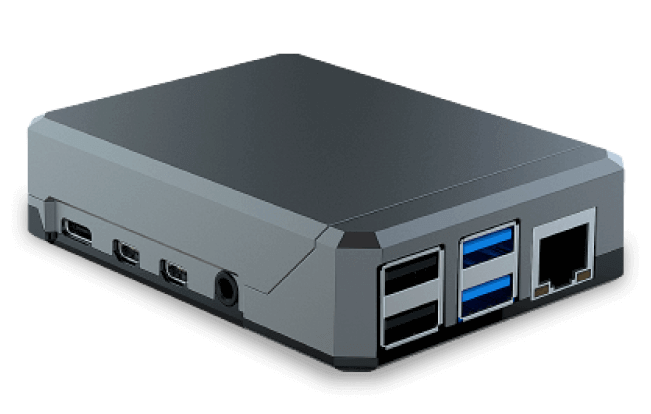
Pro tip by Yodeck Team: If your deck relies on animated charts or transitions, upload it to the Videos section rather than Documents. The server-side conversion preserves all animations and transitions, so the looped version looks exactly like the deck you designed.
Which method should you use?
Match the method to how long the slides need to stay on screen. Everything else follows from that.
For a one-time presentation, use HDMI if you can reach the TV, or whichever wireless method matches your device if you can’t. For a recurring meeting-room setup, Chromecast or AirPlay earns its keep because anyone can cast without hunting for cables. For a display that should run all day, whether that’s internal communications in a break room or a welcome deck in reception, a media player with signage software is the only method that doesn’t chain a laptop to the TV.
If the always-on route fits your situation, you can try Yodeck free on one screen and have a looping deck running the same afternoon.
Troubleshooting: PowerPoint won’t cast to your TV
Most casting failures come down to network, input or display settings rather than PowerPoint itself. Work through these in order.
The TV doesn’t appear in the cast list
Confirm both devices are on the same Wi-Fi network, then restart both. On office and hotel guest networks, the fix is often out of your hands: many guest networks run client isolation, a security setting that blocks devices from discovering each other. Casting protocols like Chromecast and AirPlay depend on that discovery, so on an isolated network the TV will never show up. Switch both devices to the main network, use a phone hotspot or fall back to HDMI.
The TV says No Signal
Wrong input. Cycle through the HDMI sources with the remote until your screen appears, and reseat the cable at both ends.
Casting lags or stutters
Wireless mirroring streams your entire screen in real time, so a congested network shows up as lag. Close background apps, move to a 5GHz network if available, or switch to HDMI for video-heavy decks.
Slides look cropped or don’t fill the screen
Set your laptop to Duplicate or Mirror mode rather than Extend, and check the TV’s picture settings for an overscan or “Screen Fit” option.
If slides cast fine but a specific media file inside the deck won’t play, that’s a PowerPoint file issue rather than a casting one, and it’s worth fixing in the deck before your next session.
Get your slides on screen and keep them there
Casting PowerPoint to a TV is a solved problem: cable for reliability, wireless for convenience, USB for offline. The real upgrade is separating one-time presentations from always-on displays, so your laptop presents and your screens run themselves. Yodeck’s free plan covers one screen with full functionality, which is exactly enough to turn one TV into a self-running presentation display.
No credit card required.
If you prefer working with Google presentations instead of PowerPoint, see our guide on how to use Google Slides for digital signage. And if you want to go beyond casting and build proper screen content from your decks, check how to use PowerPoint for digital signage.