What are the internal communication trends for 2026?
If there’s one thing everyone in internal comms can agree on right now, it’s this: Employees want better communication and they’re no longer willing to settle for anything less. Clarity, transparency, relevance… the bar keeps rising.
That’s why Yodeck conducted a new internal communications research report, gathering insights from 178 professionals across industries.
The results reveal how internal communication trends 2026 are taking shape, the challenges teams face every day, and where organizations plan to invest next.
The state of internal communications in 2026
Not too long ago, internal communications was something people handled “on the side.” Today, it’s considered essential.
- 66% of respondents say they play an active role in internal communications
- 81% say their organization has a formal communication strategy
That alone shows how much the function has matured. Internal comms have become a strategic discipline – not just a channel for sharing announcements.
When we asked which channels teams rely on most, here’s what they told us:
- Email (87%) is still the most-used internal communication channel
- Social media (54%) and meetings (49%) remain core parts of the mix
- Digital screens (34%) are becoming more common, especially in frontline or dispersed environments
In other words: Organizations aren’t choosing between traditional or digital channels – they’re blending both to reach employees wherever they are.
How important is visual communication in the workplace?
One trend stood out clearly in Yodeck’s digital signage research report: Visual communication is becoming non-negotiable.
Here’s what the data shows:
- 71% of organizations use digital signage or screens
- 57% say visual communication is “very important” to their internal comms strategy
This shift makes sense. People process visuals faster. They remember them better. And they’re far more likely to pay attention to a quick visual update than a long email or text-heavy announcement.
These visual communication statistics also explain why so many companies are turning to digital signage for employee engagement, especially in workplaces where not everyone is sitting in front of a computer.
Visuals cut through noise. They get noticed. And right now, that matters more than ever.
What are the biggest internal communication challenges?
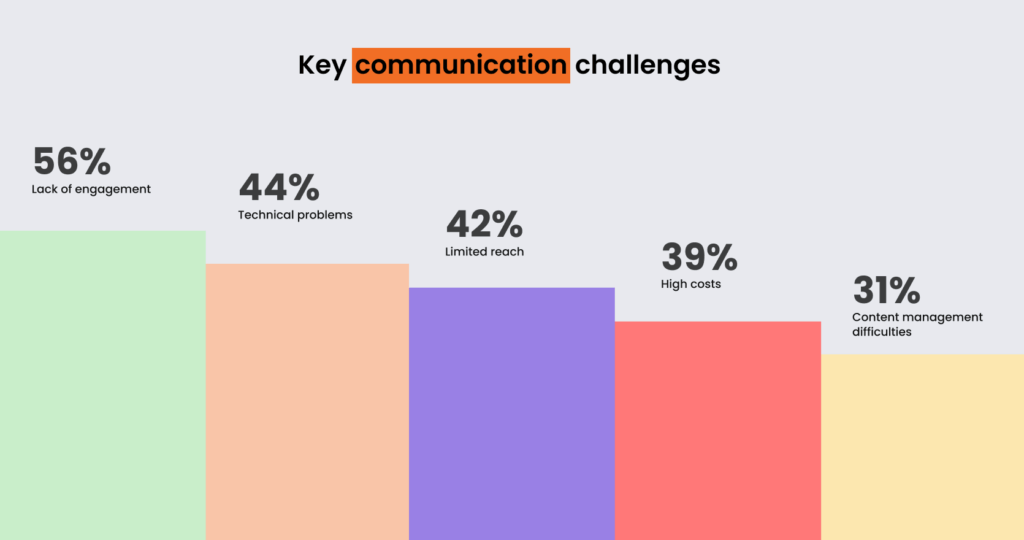
Of course, using more channels doesn’t automatically mean communication is effective. When we asked organizations what they struggle with most, here’s what they said:
- Lack of engagement – 56%
- Technical problems – 44%
- Limited reach – 42%
- High costs – 39%
- Content management issues – 31%
These results echo the questions we hear often:
Why do digital signage projects fail? Why do employees miss important updates? Why do messages get lost?
The answer isn’t lack of effort. It’s that many tools are either too complex, too scattered, or too expensive – and teams simply don’t have time to manage them all.
What organizations are prioritizing in 2026
Looking ahead, the priorities are surprisingly aligned across companies of all sizes. Organizations want communication that is:
- more engaging
- more visual
- easier to manage
- and more cost-efficient
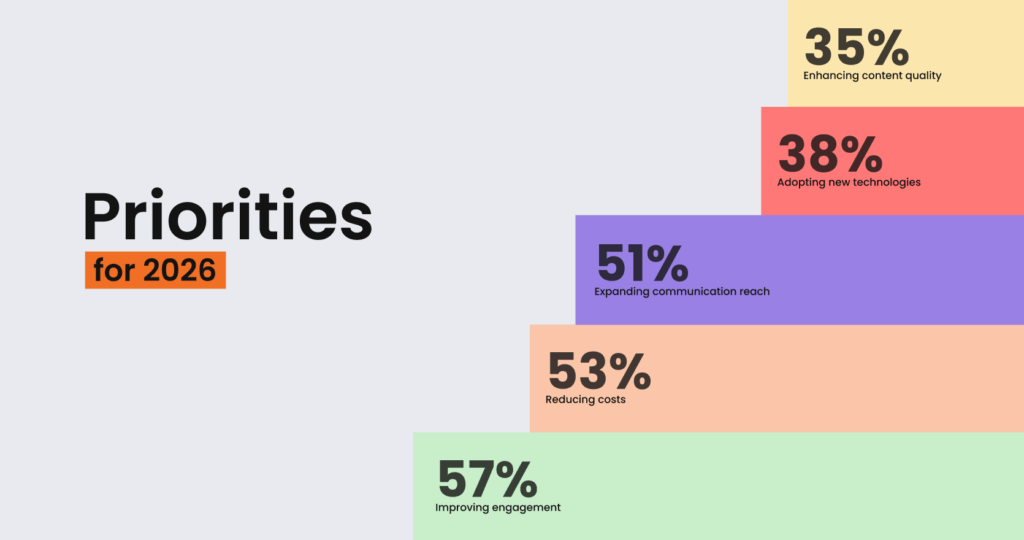
Their top goals for 2026:
- Improving engagement – 57%
- Reducing communication costs – 53%
- Expanding reach – 51%
- Adopting new technologies – 38%
- Enhancing content quality – 35%
These goals reflect the biggest internal communication trends 2026 has in store: Less noise, more clarity, smarter tools, and communication that actually helps employees do their jobs better.
Opportunities for better communication solutions
Based on the data, organizations are clearly looking for solutions that make internal communication more effective – and less of a headache. The biggest opportunities lie in tools and strategies that:
1. Boost engagement
People respond to visuals. Digital signage, micro-videos, and dynamic content can help address the #1 challenge: disengagement.
2. Simplify the process
Teams want fewer tools, fewer steps, and less “tech stress.” Simplicity is now a major decision-maker, especially given the digital signage challenges organizations report.
3. Reach every employee, everywhere
Tools that work across channels – email, social platforms, meetings, intranets, and internal communications digital signage – ensure no one is left out.
With over half of organizations aiming to reduce communication costs, affordable and scalable platforms will play a huge role.
4. Keep costs under control
And this is exactly where Yodeck comes in. By helping teams communicate visually, at scale, and at lower pricing, Yodeck makes it easier for organizations to bridge communication gaps, share important updates, and keep employees connected – without adding complexity.
Conclusion
If there’s one message from this year’s research, it’s this: Internal communications is changing and fast.
Organizations are moving toward communication that is clearer, more visual, and more employee-centered. They’re also juggling real challenges: low engagement, limited reach, rising costs, and tools that don’t always play nicely together.
By understanding the emerging internal communication trends 2026 and adapting early, companies can build communication strategies that genuinely work – for HR teams, for managers, and most importantly, for employees.
The organizations that embrace simple, visual, consistent communication will be the ones that people listen to, trust, and stay engaged with. And those are the organizations that will lead the way into 2026 and beyond.
If you’re the kind of person who loves digging into real data, you’ll probably enjoy our other internal comms survey too – feel free to take a look here.