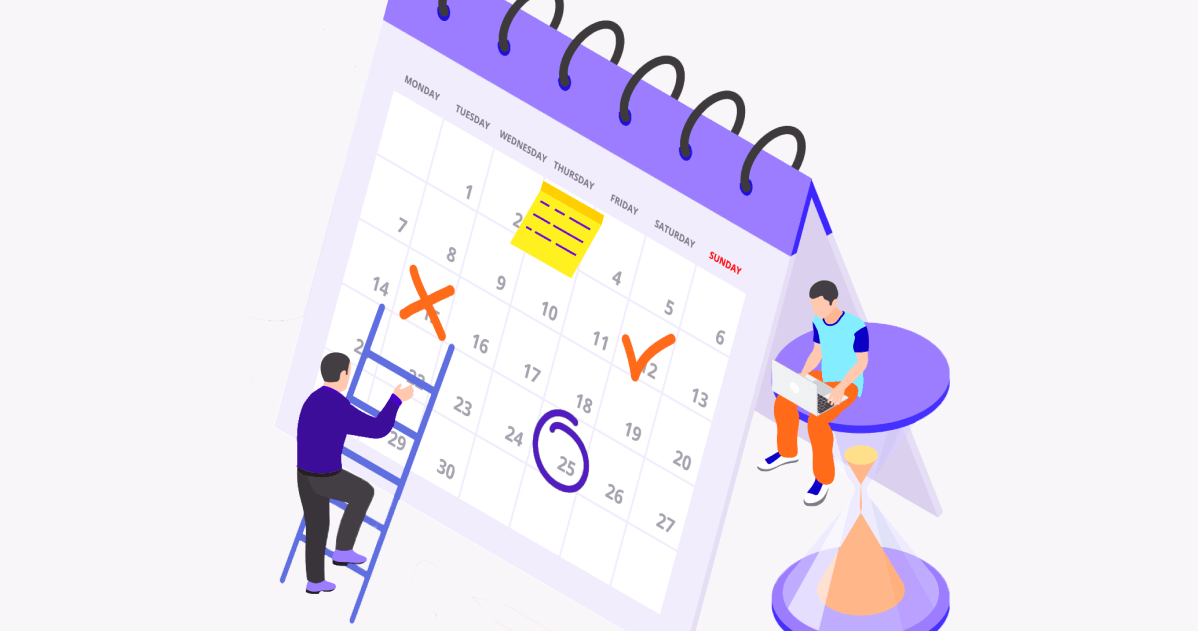
Here’s the thing about timing: It’s everything.
A Valentine’s Day message on February 15th is not romantic; it’s a reminder that someone forgot to change it. Because outdated digital signage doesn’t simply miss the moment, it becomes a monument to missed opportunities. But here’s how to turn it around: Nail the timing, and your digital signage transforms into the main conversation. It’s the difference between “oh, there’s a screen” and “oh, that’s exactly what I needed to see right now.”
Let’s talk about building a seasonal calendar that keeps your content sharp, relevant, and perfectly timed. Because in the attention economy, being late is the same as being wrong.
Why seasonal timing hits different
Think about the last time you walked past a store display that felt out of sync with reality. Maybe it was swimsuits in October or tax prep services in July. Your brain probably registered it as white noise, or worse, as a business that’s out of date.
Seasonal content works because it meets your audience where they already are mentally. When someone’s thinking about back-to-school shopping, showing them exactly that creates an instant “yes, this” moment. You’re not interrupting their thought process, you’re amplifying it.
What you get right:
- Message-to-market fit at its finest
- Engagement that actually engages
- Zero scrambling when the holidays inevitably show up
- A brand that feels current, not crusty
Map your peaks
Not all businesses run on the Hallmark calendar, and thank goodness for that. A gym’s peak season is when everyone else is nursing a food coma. A resort’s busy season might be everyone else’s dead zone.
Your industry, your rhythm:
Retail: Black Friday through New Year’s, back-to-school madness, random Tuesday sales that somehow work
Fitness: January (obviously), May-June beach panic, September redemption arc
Food & Beverage: Valentine’s Day, Mother’s Day, game days, basically any day people celebrate with eating
Healthcare: Flu season, benefits enrollment, wellness months that nobody remembers
Education: New semesters, finals week chaos, graduation season feels
Identify these patterns, then build your content calendar backward from the peaks. If Black Friday is your Super Bowl, you better be preparing in September, not November.
The three-tier system
Tier 1: The heavy hitters
Timeline: Plan 6-8 weeks out
These are your can’t-miss moments: Christmas, Black Friday, your industry’s version of opening night. They deserve the full production: multiple content variations, countdown timers, the works.
Tier 2: The supporting cast
Timeline: Plan 3-4 weeks out
Think Labor Day, Earth Day, first day of spring. They’re not headliners, but they’re worth acknowledging. A well-timed nod shows you’re paying attention without going overboard.
Tier 3: The daily grind
Timeline: Plan 1-2 weeks out
Monday motivation. TGIF vibes. Weather alerts. Sports events. The quick-hit content that keeps your screens from feeling stale between the big moments.
Your content production schedule
12 weeks before: Stare at calendar, have minor existential crisis, then start brainstorming
6-8 weeks before: Actually create the content (designs, copy, and video)
3-4 weeks before: Finalize everything, schedule it in Yodeck, preview on actual screens
1-2 weeks before: Deploy, watch, tweak if needed
During the season: Stay nimble, update in real-time
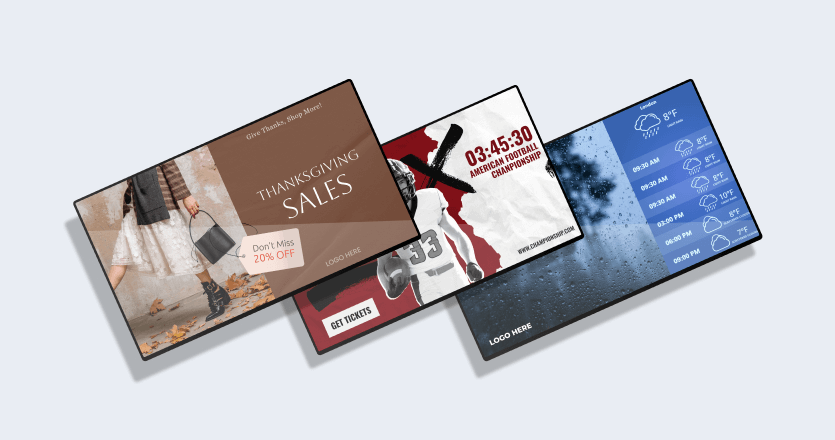
Templates are your secret weapon
Of course, nobody has time to design from scratch for every holiday. The pros know this, which is why they build smart templates once and customize fast.
Templates you need:
- The holiday chameleon – Same structure, swap the colors and imagery
- The promo machine – Plug in new offers, keep the format
- The countdown clock – Works for literally any upcoming event
- The weather responder – For when Mother Nature has opinions
- The weekly special – Consistent, updateable, low-effort
Yodeck’s Templates make this extremely simple. Build it once, customize in minutes, look like you spent hours. That’s called working smart.
The awkward in-between (and how to handle it)
Nothing screams “we forgot about our digital signage” quite like seeing hearts and cupids on February 20th. The transition periods matter just as much as the main events.
Transition tactics:
- Schedule end dates religiously (not just start dates)
- Create neutral bridge content for the gaps
- Use themes like “New Year, Fresh Start” to ease out of holiday mode
- Set phone reminders before content expires
In a nutshell, the transition should be smooth enough that nobody notices the change.
Balance is everything
Going 100% seasonal is exhausting for you and your audience. Mix it up.
The golden ratio:
- Peak seasons: 60-70% seasonal, 30-40% evergreen
- Regular times: 40% seasonal, 60% evergreen
Evergreen content that always works:
- Customer testimonials
- Your brand story and values
- How-to content and guides
- Product showcases
- Employee spotlights
This way, you’re covered even when there’s no holiday.
Get started
The point isn’t to celebrate every obscure holiday (National Donut Day can wait). It’s about showing up with the right message when your audience is actually listening. With a solid plan and Yodeck, the only intelligent digital signage platform, handling the technical heavy lifting, you’ll start leading. Your screens will feel current, your content will resonate, and you’ll finally have room to breathe between seasons.
Ready to get started? Open your calendar, mark those seasonal peaks, and start planning. Your screens (and your audience) will thank you for it.